
Delivering a public speech hours after the RBI launched a rescue act for Yes Bank on March 6, Governor Shaktikanta Das reiterated the RBI's affirmation to do whatever was needed to combat the coronavirus impact. On that day, India had only one confirmed COVID-19 infection, the World Health Organisation was five days off from declaring it as a pandemic and the financially debilitating lockdowns were not even on the horizon. Das' promise on efforts to mitigate COVID-19 impact appeared as a footnote in news reports from the event.

RBI's exercise will take into account standards of governance, the viability of the payment bank (PB) business model, and changes, if any, if needed.

At a time when the role of corporate boards is once again under the scanner, independent directors on the Paytm Payments Bank board have indicated that red flags were raised over regulatory issues but they may have been late in doing so. "As independent directors, we asked questions and monitored responses to the Reserve Bank of India (RBI). Many changes were made on compliances. "Obviously, in retrospect, it was not found to be enough," said one of the independent directors on the condition of anonymity.

Going by the RBI directive and the overall narrative, Paytm may have lost the rigour of stress tests, audits and compliance.

A Bill seeking to give more operational flexibility to the Reserve Bank of India in the conduct of monetary policy was passed in Lok Sabha on Friday.

The Reserve Bank on Monday asked all banks and financial institutions to assess the impact on their balance sheet, asset quality, liquidity, among others, in the wake of the potential threat arising out of the spread of coronavirus disease in India. Several confirmed cases have also been detected in India, which highlight the need of a co-ordinated strategy for handling the emerging situations to protect the resilience of the Indian financial system, RBI said in a notification addressed to banks, urban cooperative banks, NBFCs, payment and small finance banks.

The broader economy risks a potential flight of foreign portfolio capital, therefore pressure on the rupee and more bad news on the stock market, warns T N Ninan.
'The PCA framework was revised and tightened in April 2017, but there was no discussion in any board meeting. The government does not know the rationale behind revising the framework and how the RBI arrived at it. Similarly, there was no discussion in the board meeting on the revised NPA framework,' said an official.
As all regulators are part of it, individuals don't need to worry about approaching the right authority

Officials said Sebi is closely in touch with RBI on the market developments.
The government and financial sector regulators buried their differences on the proposed Financial Stability & Development Council (FSDC) after Finance Minister Pranab Mukherjee offered the Reserve Bank of India governor a sweetener.
An NBFC must actively manage its collateral positions, differentiating between encumbered and unencumbered assets, and monitor such assets so that they can be mobilised in a timely manner, central bank says in circular.

The health of Indian banks continued to improve in 2021-22 with their balance sheet growing at double digits after a gap of seven years and their asset quality and capital position bettering, the Reserve Bank of India (RBI) said in its annual report on trend and progress of banking in India. At the same time, the banking regulator flagged the issue of slippages from restructured accounts. "Going forward, it is imperative that banks ensure due diligence and robust credit appraisal to limit credit risk," the report said.

'To the believers of crypto regulations, I have only one question to ask, how will you regulate it?'

The home loan top-up, a kind of secured multipurpose personal loan, is on the regulator's radar, points out Tamal Bandyopadhyay.
For the past 10 years or more, the RBI has been turning down dozens of applications under the RTI Act that sought disclosing the list of wilful defaulters and the RBI's inspection reports. In fact, it is the only organisation that has a granular and complete view of the heist that has been going on for 25 years at least. But it has escaped any blame for the multiple rounds of bankruptcy and massive periodic recapitalisation of public sector banks caused by bad loans. In fact, they don't want anyone to know how incompetent and collusive they have been in handling bad loans, says Debashis Basu.

With a sole mandate of inflation targeting, RBI wears many hats.

Kochhar's counsel argued that according to Section 35B (b) of the Banking Regulation Act, prior approval of the RBI is required to terminate the contract of a bank's chairman or managing director. But in this case, the RBI approval came after the termination letter was served.

Indian regulators have identified certain groups as 'financial conglomerates' and they are being monitored closely for any systemic risks they may pose.
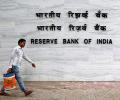
Given the pressure from India Inc and the banking fraternity, it is surmised that the portfolio rejig will take place before April.

'If the borrower can't repay the loan due to lack of income or losses from speculative activities, they risk defaulting on it.' 'This could lead to the bank seizing the property.'
'When an institution believes its knowledge and capability is superior to everyone, it behaves like a frog in the well.' 'And this is precisely the cause for the mess,' says J N Gupta.
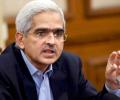
The rising COVID-19 infections across the country are a matter of concern, but it may not impact the ongoing economic revival as one does not foresee lockdowns, Reserve Bank Governor Shaktikanta Das said on Thursday. The economic revival will continue "unabated", Das said, asserting that there is no need for a downward revision of RBI's 10.5 per cent GDP growth forecast for FY22. Speaking at Times Network's India Economic Conclave, Das said, "We have 'insurance' to protect economic revival like a fast-paced vaccination drive, greater ability among people to follow COVID protocols", and one does not see lockdowns as well.

The Supreme Court had observed that issues of national economic interest; disclosure of information regarding currency or exchange rates/interest rates/ taxes; regulation or supervision of banking, insurance and other financial institutions; proposals for expenditure or borrowing, and foreign investments, could all, in some cases, harm the national economy, especially if released prematurely.

The International Financial Services Centre Authority (IFSCA) plans to operationalise the framework for direct listing of companies at International Financial Services Centre (IFSC) exchanges by the end of the year, said Chairperson K Rajaraman. He added that the amendments would be notified within three months. Further, the GIFT City regulator is also considering the launch of separate payments system regulations - similar to that of the real time gross settlement (RTGS) for banking within a few months.

Chanda Kochhar, the high-profile ex-banker had on November 30 moved the Bombay high court challenging "termination" of her employment by ICICI Bank which also denied her remuneration and clawed back all the bonuses and stock options between April 2009 and March 2018 for her alleged role in granting out of turn loans worth Rs 3,250 crore to the Videocon Group which benefitted her husband Deepak Kochhar. A division Bench of justices Ranjit More and SP Tavade allowed her to implead RBI and directed the apex bank to file its reply by December 16.

The bottom lines of several private sector banks have taken a hit following the recent guidelines released by the Reserve Bank of India (RBI) on alternate investment fund (AIF) investments. Last month, the RBI announced that regulated entities, such as banks, non-bank lenders, and home financiers, cannot invest in AIFs that have directly or indirectly invested in companies that have borrowed money from the lenders. In case an entity had already made such an investment, they must liquidate the investment or make 100 per cent provision, RBI had said.

Despite steady loan growth, the banking sector is expected to report subdued margins in the quarter ending June 2024 (Q1FY25), driven by high demand for deposits amidst tight liquidity conditions. However, according to Bloomberg analysts, listed banks are forecasted to see a 14.5 per cent year-on-year (Y-o-Y) increase in net profit. Estimates showed that banks' net interest income (NII), and revenues from interest minus interest expenses might grow 11.9 per cent Y-o-Y.

"Virtual currencies, also variously referred to as crypto currencies and crypto assets, raise concerns of consumer protection, market integrity and money laundering, among others," RBI said.

NBFCs which have not met Sebi criteria will face tough action.

'Consider 40% to 50% in equities, 10% in gold as a hedge, and the remaining 30% to 40% split between multi-asset funds and hybrid funds.'

'The RBI has not allowed any commercial bank to fail in the past three decades.' 'It has always played the role of a matchmaker, but this is the best deal it has stitched,' notes Tamal Bandyopadhyay.

Observing that the economic recovery was not yet fully entrenched, the RBI Governor said recovery is likely to be gradual.

The Financial Stability and Development Council members include heads of regulatory bodies like RBI, Sebi and Insurance Regulatory Development Authority.

The crisis at the bank is attributed to loans made to realty player Housing Development Infrastructure Ltd, which were allegedly hidden from regulators' scrutiny, turning non-performing assets.

The RBI now brings in important and contentious changes directly through voluminous Master Directions, or Master Circulars

Finance Minister Arun Jaitley on Sunday said there is no 'disconnect' between the two.

HDFC Bank on Thursday said network outages that led to a regulatory ban on new credit card sales were not due to transaction volumes, and affirmed that it continues to stay in touch with the RBI for restarting the services but giving a timeline for it will be difficult. The bank said it is on its way to creating a new technology architecture for the future as part of the "digital factory" and "enterprise factory" initiative. But, it conceded that outages will continue under the older system though it will be working to minimise the time taken to bring the service back. In December 2020, the RBI took the unprecedented step of stopping the largest private sector lender from selling any new credit cards and also launching new digital services, because of a series of network outages.

If indeed the issues involved between the government and RBI are of immense public interest, why not make public the arguments of both the government and the RBI, irrespective of the outcome of the process, says Tamal Bandyopadhyay.However, the Act is silent on what happens if the governor's views differ from that of the government. If Patel does not want to budge from his stance the government can either see merit in the Governor's arguments and decide against going ahead with its plan or overrule him. My guess is that the issues raised by the government need to be sorted out not at the November 19 board meeting but between the Governor and the government, says Tamal Bandyopadhyay.

Tech giant Apple has stopped accepting payments via debit and credit cards in India. Apple has stopped accepting cards for subscriptions, and purchases using credit cards issued by banks in India. Apple will also not accept payments for ad campaigns on Apple Search using credit cards issued by Indian banks. All campaigns will be put on hold from June 1.
